 Wipkin
01
Find waiting work sooner.
See where work is accumulating before deciding what needs attention.
Kanban
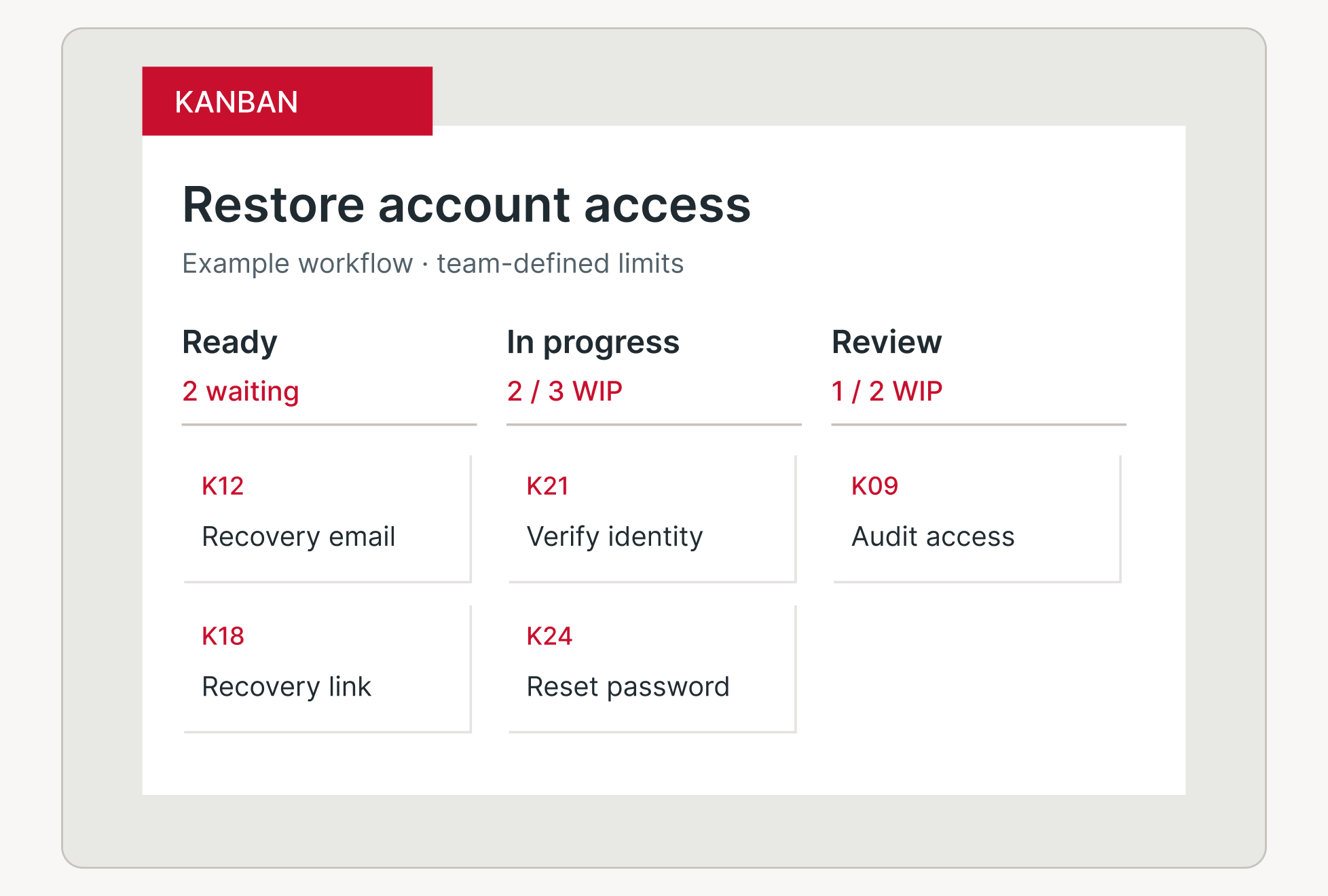
A Kanban workspace grounded in Kanban University’s guide, where your team defines its workflow, policies and WIP limits.
01
See where work is accumulating before deciding what needs attention.
02
Make capacity visible so the team can focus on completing or unblocking work.
03
Use recorded work history to discuss where a change could help.
From your process to a shared board
A new Kanban project begins without preset columns or items. Define the workflow and agreements that fit the work you already do.
01 / Make work visible
Name the stages your work moves through. Decide where work starts, where it finishes and what waiting means.
02 / Make policies explicit
Write down the criteria for pulling work and the rules that help everyone interpret the board.
03 / Control work in progress
Choose the limits that fit your workflow. Finish or unblock work before starting more when a limit is reached.
The team owns the agreement
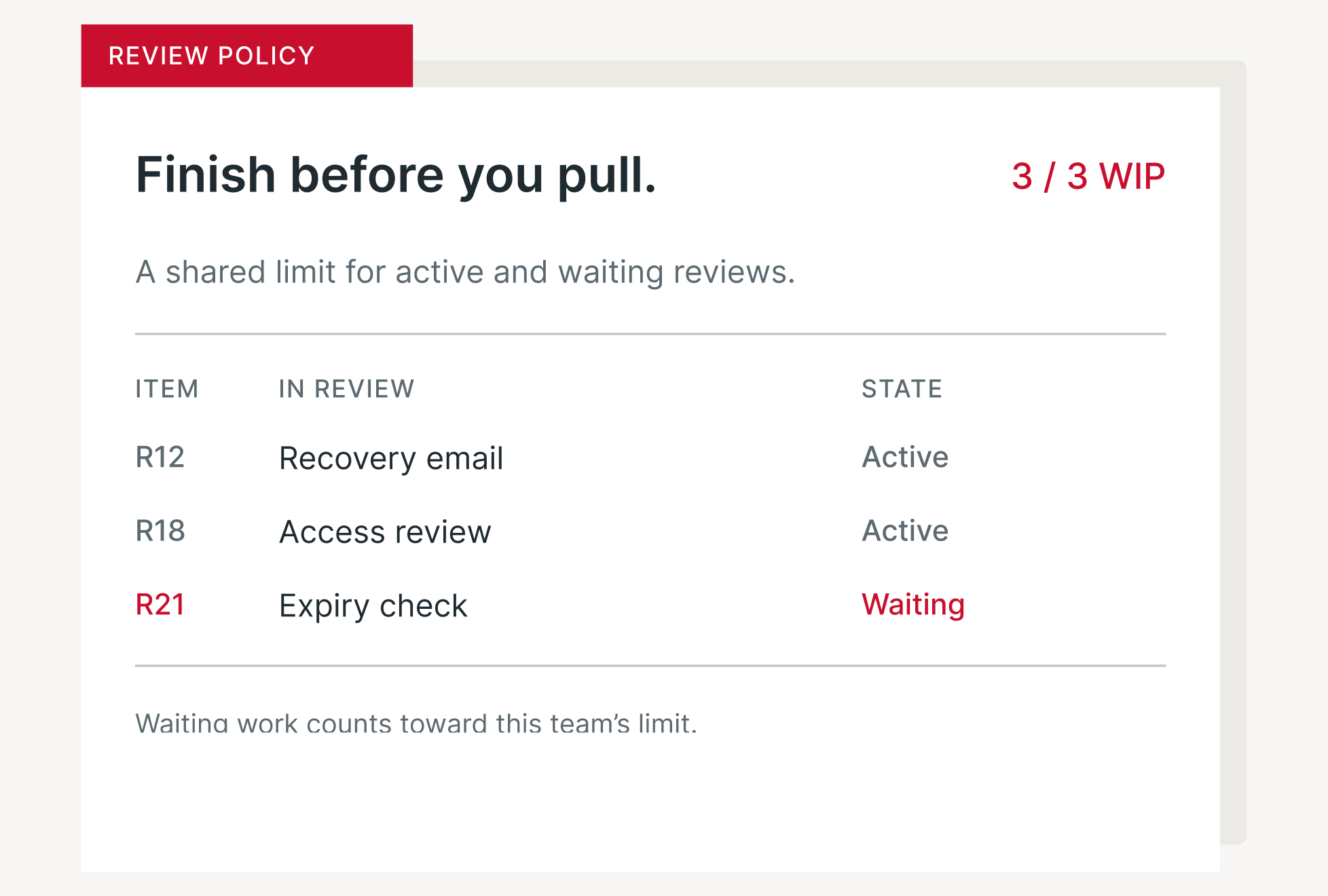
Columns, limits and pull policies are your team’s decisions. The example board shows one possible agreement.
In the workspace
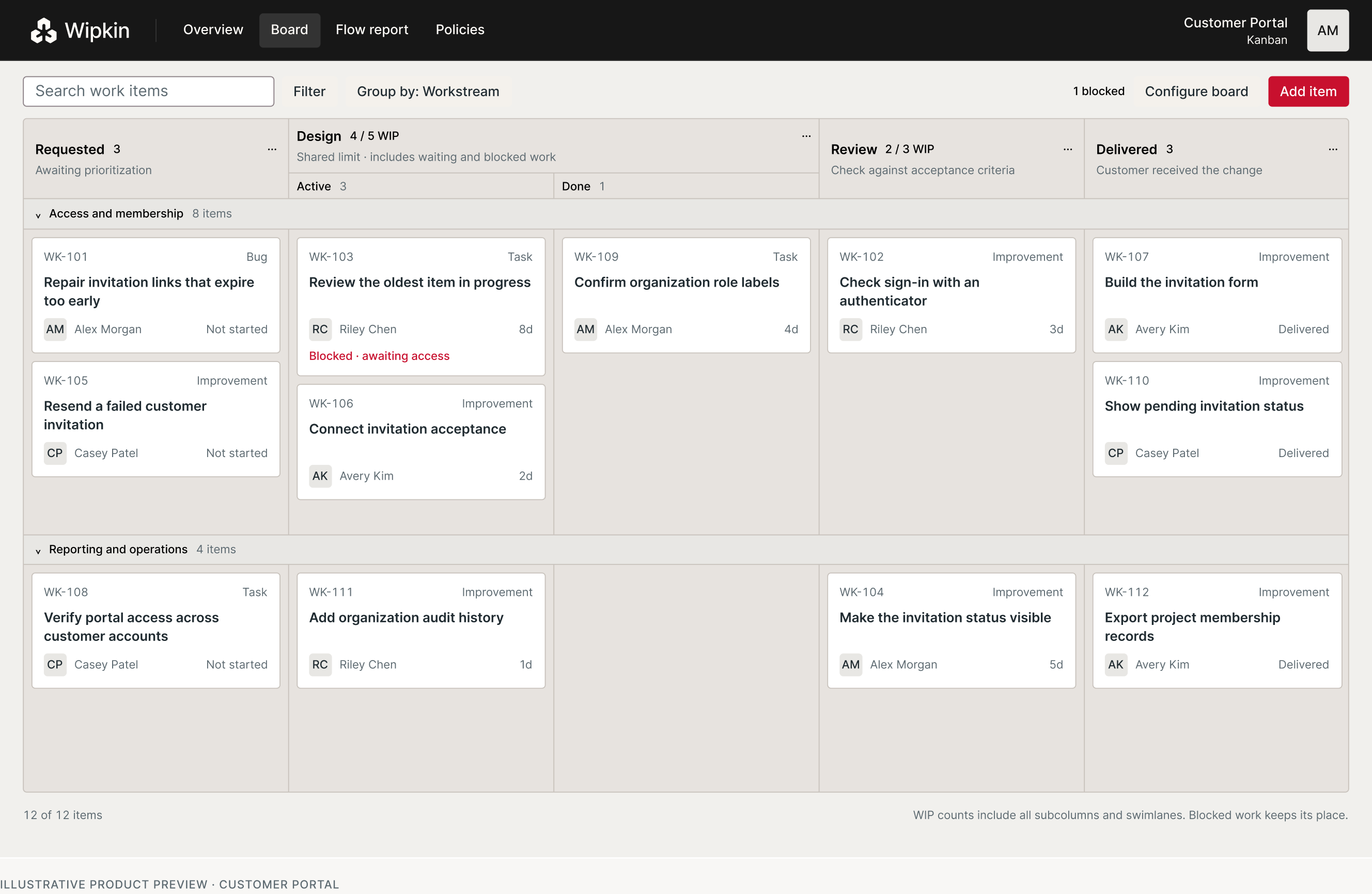
In this example, review work shares a WIP limit. Check the waiting and blocked items before pulling more work into review.
Visual workflow
Look at waiting and blocked items to decide where the team should focus.
Shared WIP limits
Read the shared limit across review stages before bringing another item into review.
Flow measures
Use work-item age to discuss unfinished items. Review cycle time and throughput as work finishes.
Built on Kanban University’s guide
The guide provides the practices. Your team defines how they apply to its own workflow.
The foundation
Visualize work, limit work in progress, manage flow and make policies explicit.
The team’s choice
Your team defines stages, limits, pull policies and the boundaries used for flow measurement.
The workspace
Keep workflow policies, shared limits and recorded flow visible when deciding what to pull next.
Questions before you begin
No. A new Kanban project starts without preset columns or items. Your team defines a workflow that reflects its own work.
The team agrees on limits for its workflow and revisits them as it learns. A shared limit can cover related stages when that matches the team’s policy.
Define the Start and End points and record work events first. Measures describe that workflow and history; an empty board does not yet provide meaningful flow evidence.
Yes. Scrum and Kanban are included in beta. Each project uses one method, with different projects sharing an organization.
See work in progress, agree limits and find opportunities to improve flow.